The game
Game
Airline Challenge is a turn based airline management game. You choose where to fly, what to fly, what to charge and how to pay for it, one week at a time.
A turn
A turn is one week, or in monthly play four or five. You open and close routes, set frequencies and fares, buy or sell aircraft, borrow, advertise and negotiate. Then you advance. The world moves: weather cancels flights, rivals respond, passengers choose between itineraries, and events from the history of the period arrive on their dates.
The game stops when something needs your attention. In monthly play it also stops for strikes, aircraft out of service and fuel shocks, because you have fewer chances to react.
Before you take off
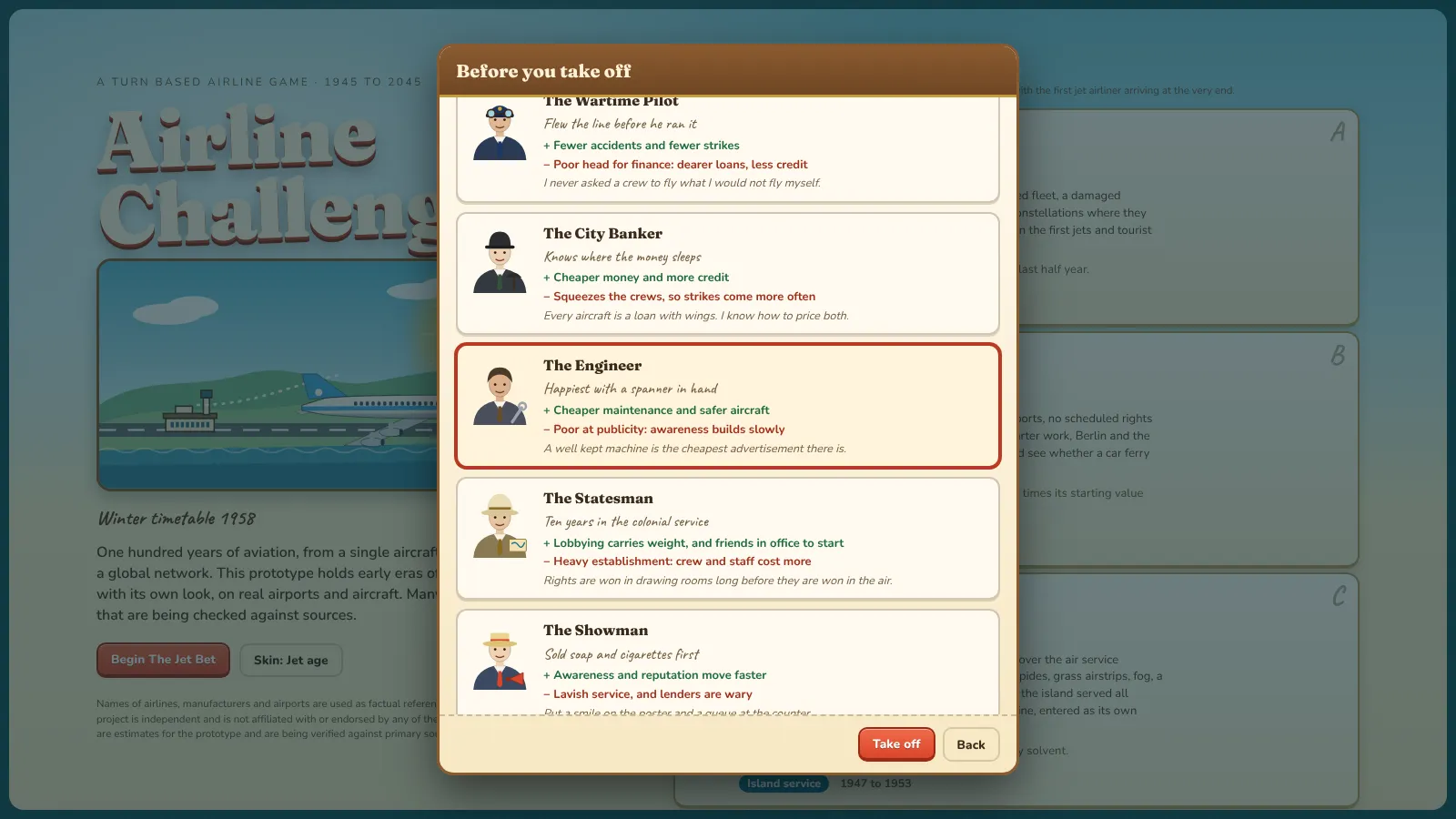
Each game starts with four choices. Turns: weekly or monthly. Funding: a thin purse, a fair start or backers behind you, which change your starting cash and debt and weigh your final score. Your chair: a chief executive for the era, each with a real strength and a real flaw. Rivals: the airlines the research describes, or up to 99 others, the extra ones invented for the game and labelled as fictional.
Other airlines
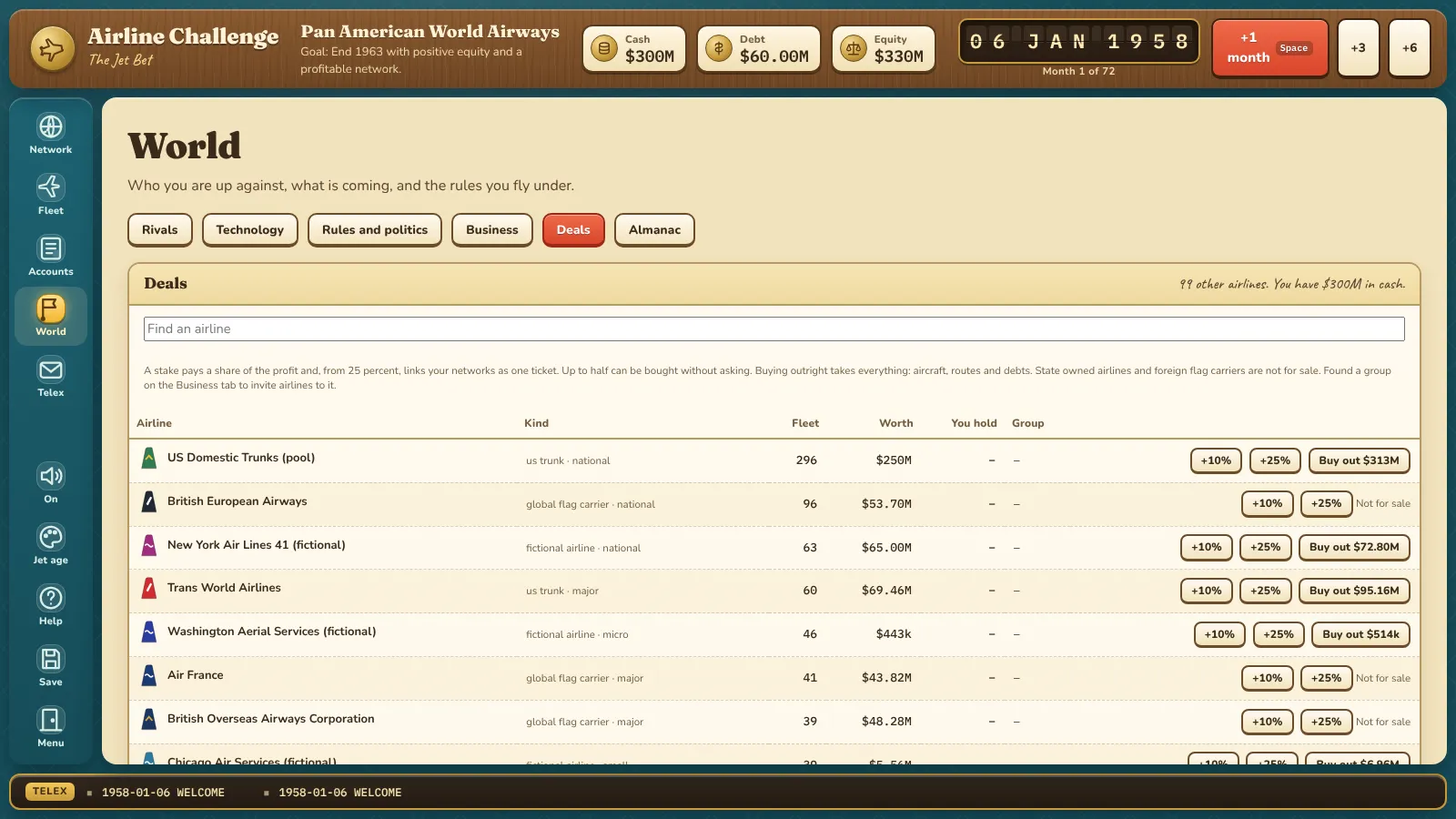
The other airlines make deals too. They found groups that carry each other's passengers on one ticket, buy stakes in partners and in weaker airlines, buy failing airlines before they fall, and make offers to you. You can do the same: ask a rival to join your group, buy part of it in steps of ten or twenty five percent, or buy it outright with its aircraft, routes and debts. State owned airlines and foreign flag carriers are not for sale.
Passengers
Passengers do not choose routes. They choose journeys. A traveller from Chicago to London compares a connection through New York on two airlines with a single airline journey and with not travelling at all. If a rival cuts the fare on the first leg, more passengers arrive at your onward flight. The simulation is built so that this kind of network effect appears without being scripted.
Ways to start
The Jet Bet
Run an Atlantic network carrier through the arrival of the jets. Order too early and you carry empty seats and debt. Too late and your rivals take the best passengers.
Independent
A small British independent with old transports and a licence that limits where you may fly. Win seasonal charter contracts, stay legal and grow.
The Sole Link
One aircraft, one island and one route. Weather, a subsidy contract and a ferry rival decide your year.
What it looks like
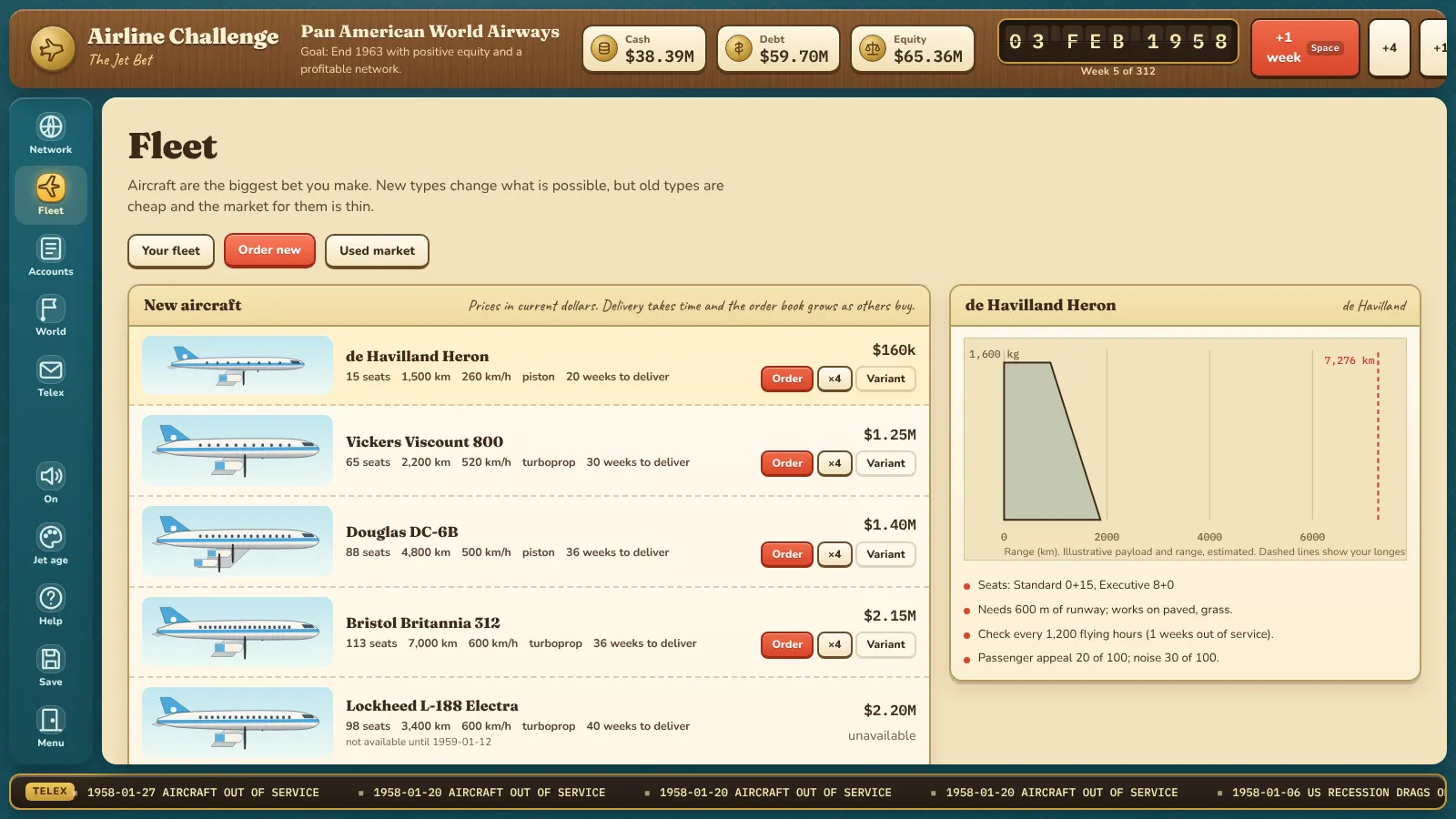
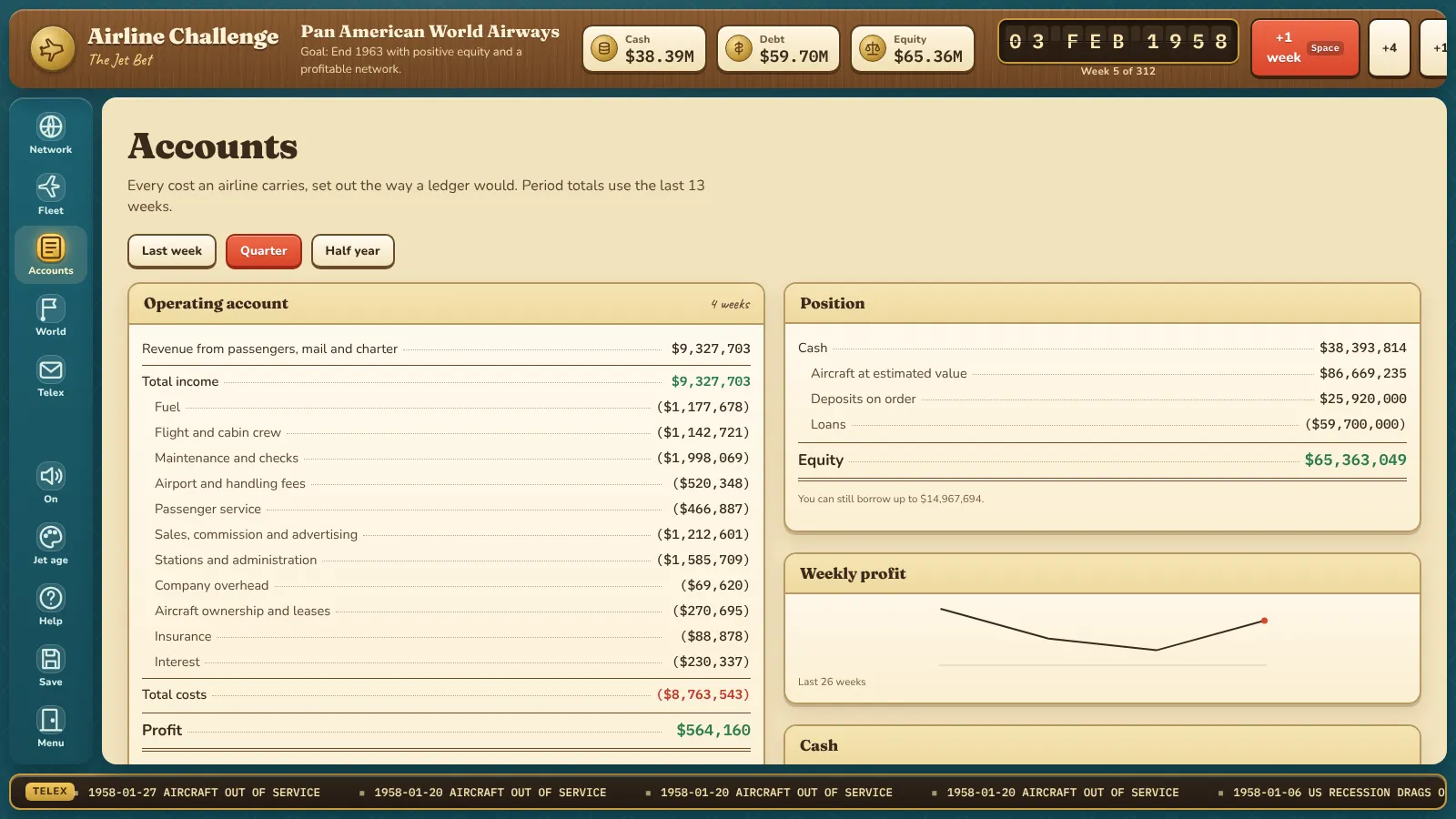
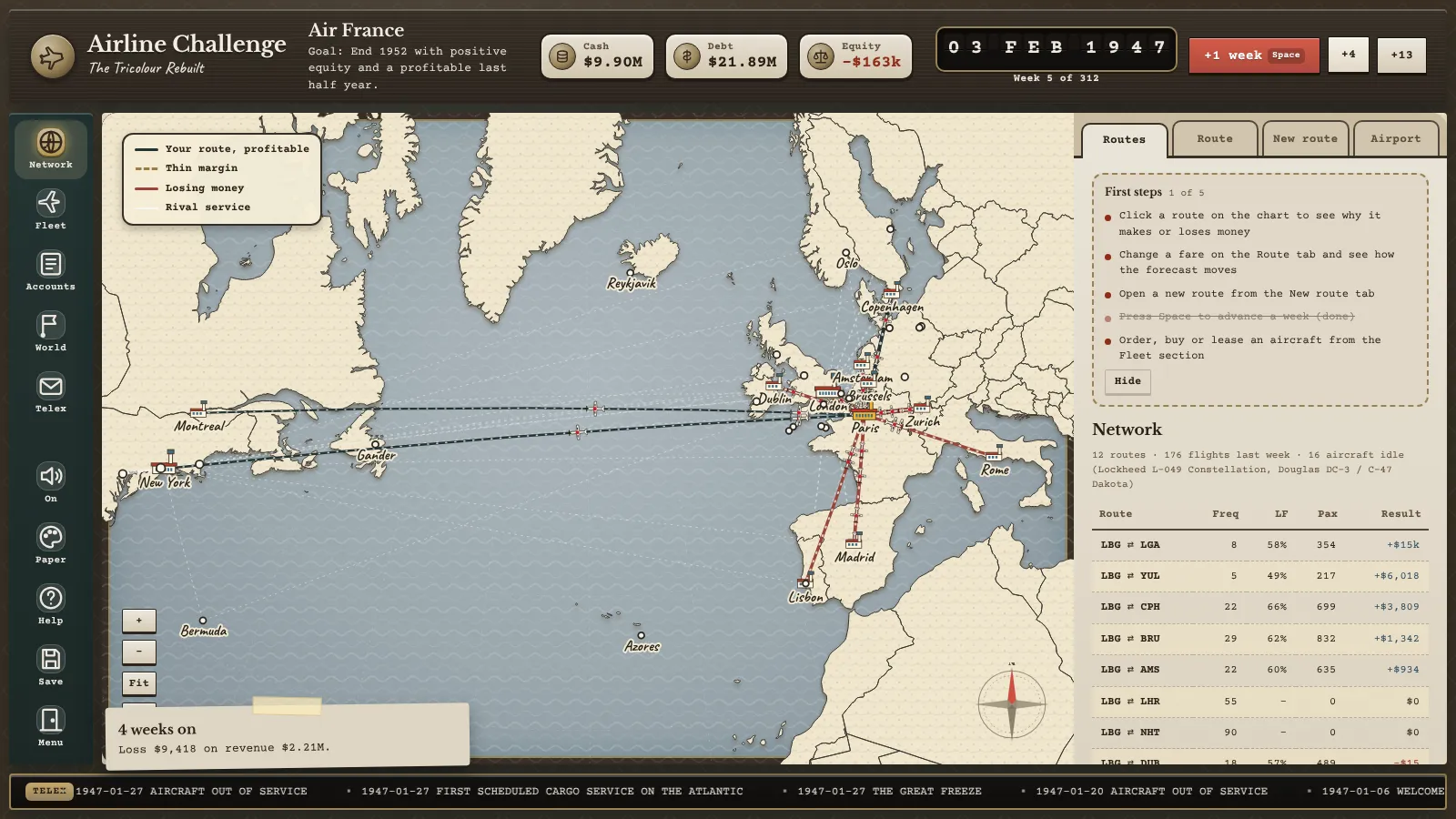
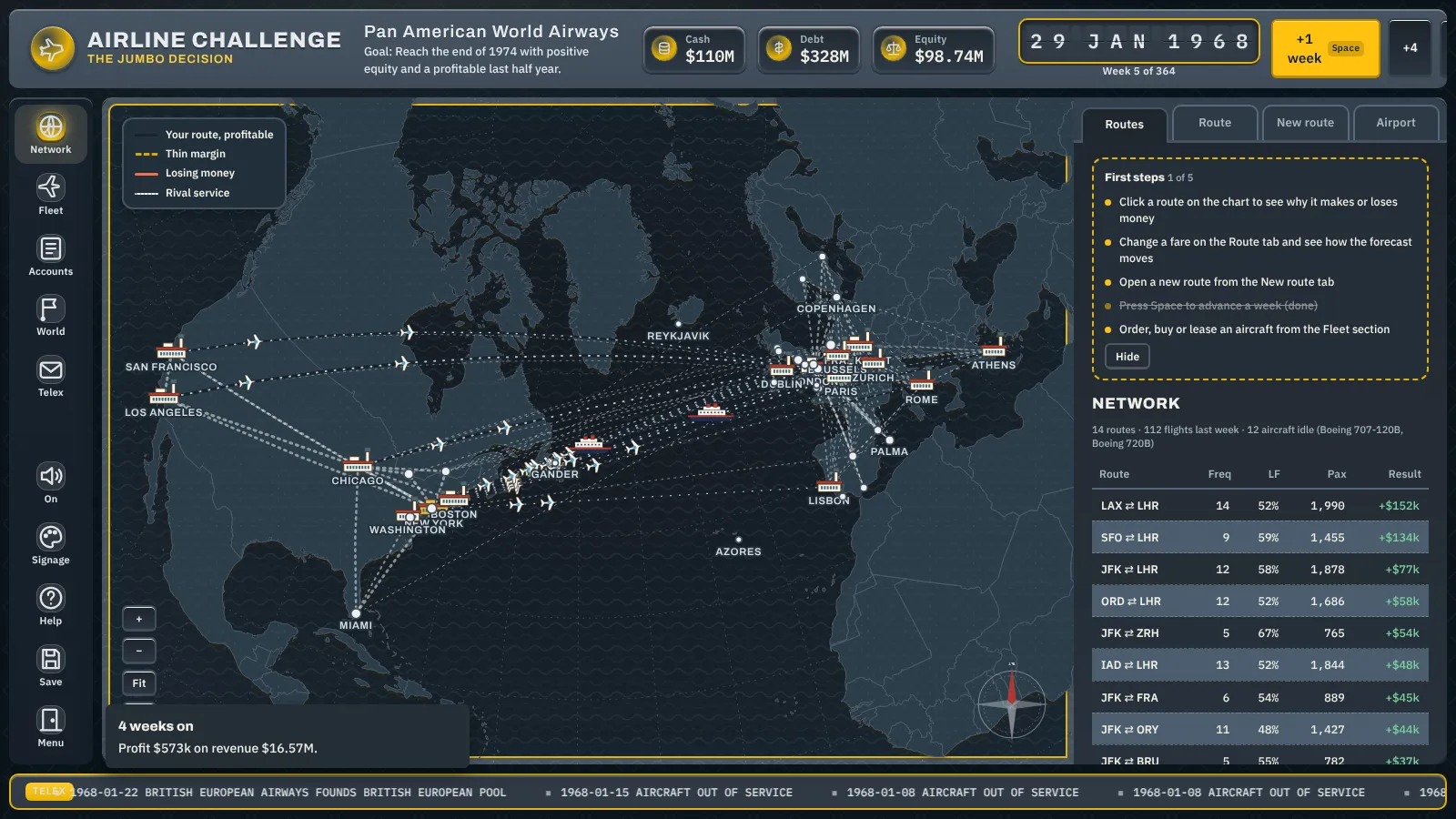
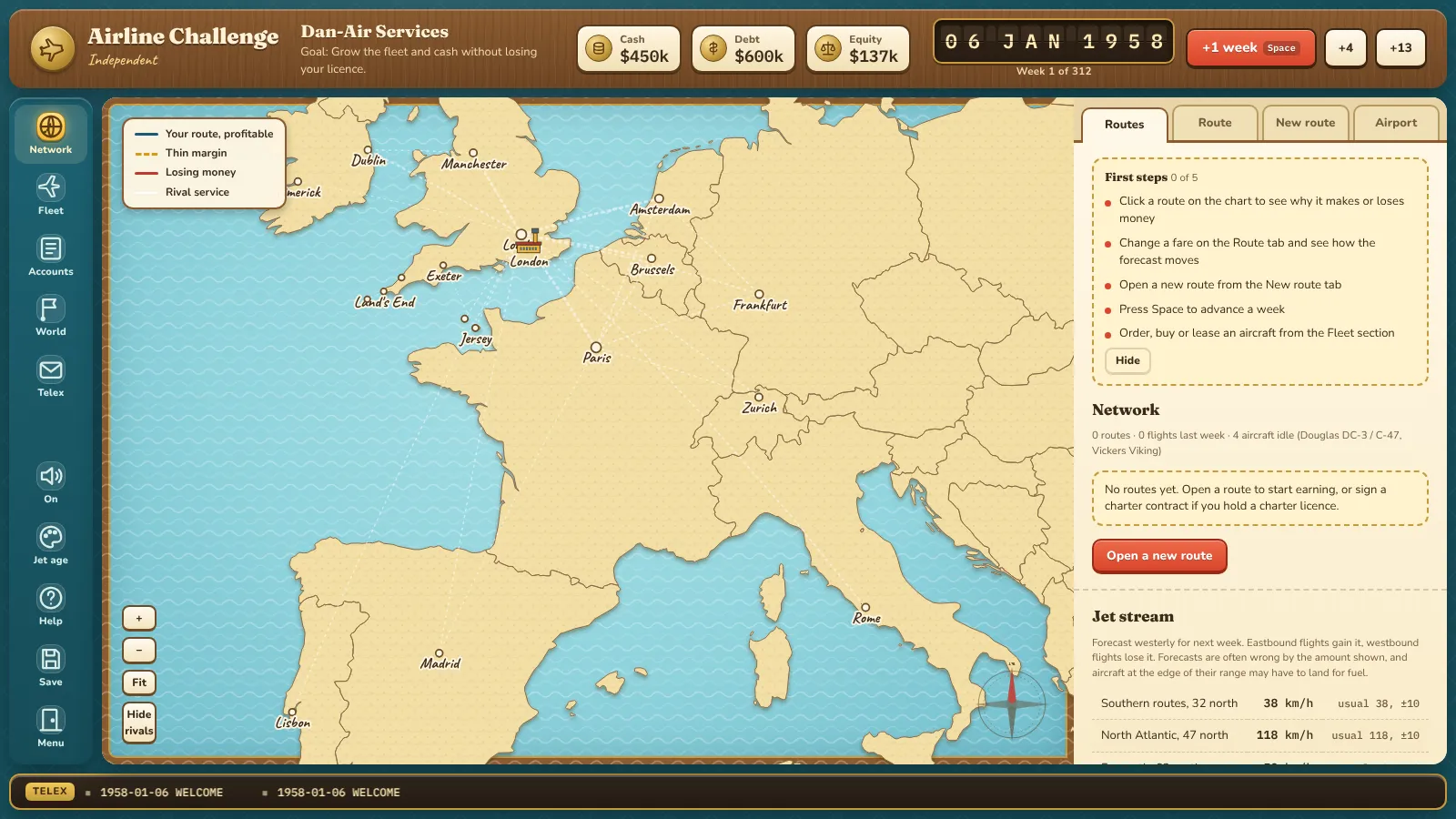
Every era has its own look, built from the same parts. The jet age of 1958 is a travel agent's office in turquoise and brass. The postwar years of 1947 are a typewritten ledger in sepia. The jumbo decade of 1968 is a terminal concourse in slate and one yellow. The deregulation years of 1976 are a departure board in amber on black. The hub years of 1985 are a reservation terminal in grey and navy with a green phosphor board. Every pack except the original 1958 one is a draft that has not yet been reviewed against sources.
Platform
Airline Challenge is being designed as a desktop game. The current prototype runs in a browser so that the economy and the interface could be tested quickly. It is not published on this site because its data is not yet verified. After it passes its tests, the real game will be built in an engine chosen for the job.
The prototype currently holds 38 airports, 17 aircraft types, 11 airlines and 33 dated events for 1958 to 1963.